
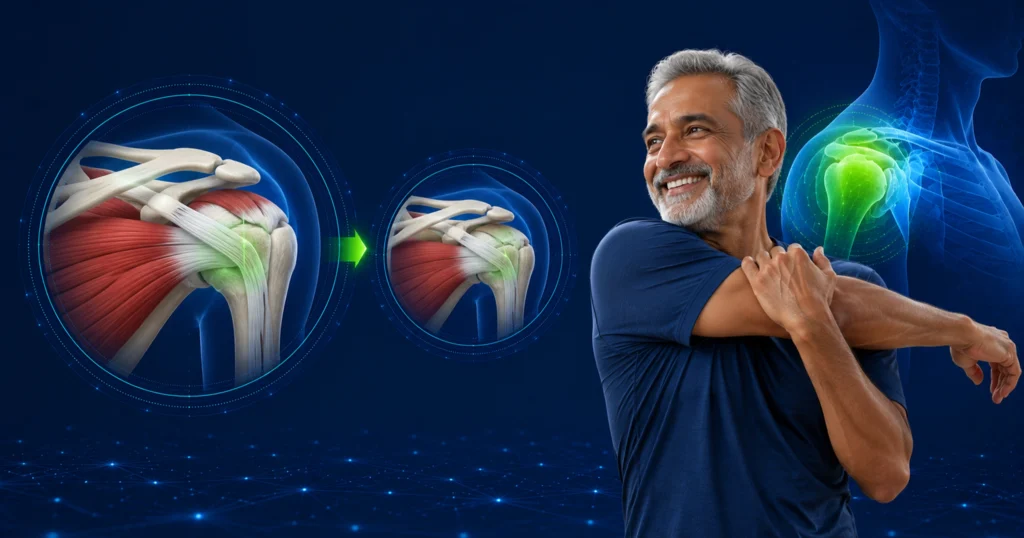
A rotator cuff tear is more than just a physical injury; it is a significant barrier to your daily life. It can stop you from reaching for a high shelf, getting dressed in the morning, or even enjoying a peaceful night's sleep. When your shoulder tendons are damaged, you lose more than just strength—you lose your independence. Rotator cuff repair surgery India has become a global gold standard for patients looking to fix these tears and return to their active lifestyles. By choosing Shoulder tendon repair India, you are accessing world-class surgical expertise in a setting that prioritizes your comfort and recovery.
Understanding the Rotator Cuff and Why It Fails
Your shoulder is a complex "ball-and-socket" joint. The rotator cuff is a specialised group of four muscles and their tendons. These tendons act like a tight sleeve or a "cuff" that keeps the ball of your upper arm bone firmly centred in the shoulder socket, allowing you to lift, rotate, and reach behind your back. When one of these tendons tears, the "sleeve" no longer holds the joint together correctly, leading to instability and significant pain.
How Do Tears Happen?
Sudden Injury: This happens if you fall on an outstretched arm or lift something far too heavy with a sudden jerk.
Wear and Tear: The most common cause. These happen slowly as we age, as the blood supply to the tendons decreases and makes self-repair harder.
Signs You Might Need Surgery
Sharp Pain when you move your arm in a specific way; Muscle Weakness that makes your arm feel heavy and lifting difficult; Crackling Sounds—a "popping" or "grinding" sensation when moving; and Sleep Issues where pain wakes you at night.
The Modern Surgical Method
In the past, shoulder surgery required large incisions. Today, Shoulder tendon repair India is typically performed using advanced, minimally invasive techniques that have revolutionized the recovery process.
The Role of Shoulder Arthroscopy
Most repairs are now done through "keyhole" surgery. The surgeon makes two or three tiny incisions, each less than a centimeter long. A small camera called an arthroscope sends a high-definition image to a monitor, letting the surgeon see the tear in incredible detail while miniature tools perform the repair.
How the Tendon is Fixed
The surgeon brings the torn tendon back to its original home on the bone using "suture anchors"—tiny devices placed into the bone. Strong threads attached to these anchors are looped through the tendon and tied down, holding it firmly against the bone so they grow back together naturally.
Why India is the Premier Destination for Shoulder Care
India is a top choice for orthopedic surgery because it combines expert doctors with very advanced facilities. The most immediate benefit is the shoulder arthroscopy India cost—often 60% to 80% less than countries like the US or the UK. This lower cost is not due to lower quality; Indian hospitals offer the same high-quality, FDA-approved implants and high-tech equipment at a price accessible to more families.
Best Surgeons for International Patients
The best rotator cuff surgeons in India for international patients are highly sought after for their vast experience treating complex sports injuries and advanced age-related tears.
Cultural Ease
International Patient Centres in Delhi and Mumbai provide English-speaking staff and professional interpreters so you can communicate comfortably.
Seamless Logistics & Visa Support
Help with medical visas for you and your family, airport pickup in comfortable cars, and assistance with local hotel bookings.
The Path to a Full Recovery
Surgery fixes the anatomy, but rehabilitation restores the function. Because a tendon takes time to grow back into the bone, you must be patient.
The First 48 Hours: You will usually stay in the hospital for 1 or 2 nights. Most surgeons in India use a "nerve block," which numbs your entire arm for several hours after surgery, making the first day very comfortable.
Phase 1 – Protection (Weeks 1 to 6): You wear a specialized sling and must not lift anything—not even a cup of water. A therapist moves your arm for you (passive motion) to keep the joint from getting stiff.
Phase 2 – Active Motion (Weeks 6 to 12): Once the tendon begins to bond with the bone, the sling is removed and you start using your own muscles to lift your arm with your therapist's guidance.
Phase 3 – Strengthening (Months 3 to 12): Light weights and resistance bands rebuild the muscles. Most patients return to driving and office work, with full strength for heavy sports returning after 6 to 10 months.
Frequently Asked Questions
Is the shoulder arthroscopy surgery safe?
Yes. It is a very common and safe procedure. Because the incisions are tiny, the risk of infection or heavy bleeding is much lower than in old-fashioned surgery.
How long will the repair last?
If you maintain good shoulder strength and avoid heavy, sudden jerking movements, the repair can last for many decades.
Why is the shoulder arthroscopy cost in India so much lower?
It is due to the lower cost of living and hospital overhead in India. The medical technology and the expertise of the surgeons are equal to or better than many Western hospitals.
When can I fly home?
Most international patients are cleared to fly safely about 2 to 3 weeks after surgery. Your doctor will perform a final check-up to ensure your wound is healing perfectly.
One-stop connections run from Lagos, Abuja, Douala and Yaoundé to Delhi via Addis Ababa, Doha, Dubai or Istanbul. We issue the medical visa invitation letter, meet you at the airport and arrange accommodation near the hospital for you and anyone travelling with you.
Costs for this procedure are quoted case by case. Send your reports on WhatsApp and we will return a written estimate within 24 hours, quoted in US dollars with the equivalent in Naira (₦) or CFA francs at that day's rate.