
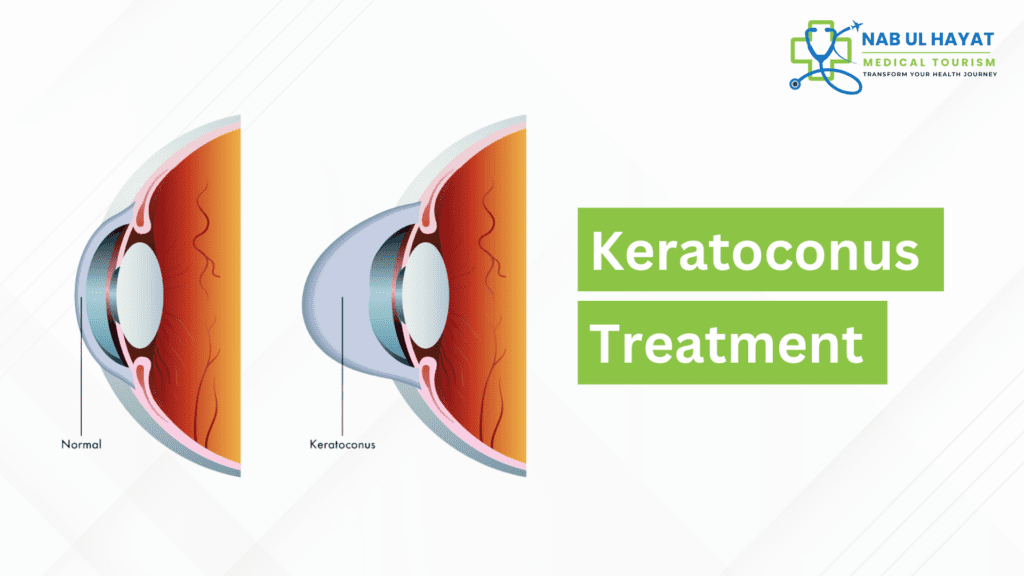
Keratoconus is a progressive eye condition in which the cornea becomes thin and cone-shaped, causing blurred and distorted vision. Keratoconus treatment in India offers every stage of care, from corneal cross-linking that stops early progression to advanced surgery for severe cases. Patients from Nigeria, Cameroon and across West Africa choose India for experienced corneal specialists, modern technology, and savings of 60 to 70% compared to treatment at home.
What Is Keratoconus?
In keratoconus, the normally round cornea gradually thins and bulges outward into a cone shape. Light entering the eye is scattered instead of focused, causing distorted vision that glasses often cannot fully correct. It usually appears in the teens or twenties and can progress for years if untreated.
Common Signs of Keratoconus
Keratoconus Treatment Options in India
Treatment depends on the stage of the disease. Indian specialists use advanced corneal scans to map the shape and thickness of your cornea and recommend the right option, always starting with the least invasive choice.
1. Corneal Cross-Linking (C3R / CXL) for Early Keratoconus
Cross-linking strengthens the cornea using riboflavin (vitamin B2) drops activated by controlled UV light. New bonds form within the corneal tissue, making it firmer and stopping the disease from getting worse. It does not aim to improve vision immediately, but it protects your vision for the future. When done at the right time, cross-linking can prevent the need for complex surgery later.
2. Intracorneal Ring Segments (ICRS)
Small medical rings are placed inside the cornea to reshape it and reduce irregular curvature, making vision clearer and more stable. The procedure is minimally invasive and completed in a short time. In many cases, ICRS delays or avoids the need for a corneal transplant.
3. Corneal Transplant for Advanced Keratoconus
In very advanced cases, when the cornea becomes too thin or scarred, part or all of the damaged cornea is replaced with healthy donor tissue. Indian eye hospitals follow strict safety standards with careful post-surgery follow-up to ensure proper healing and vision improvement.
Cost Comparison: India vs Other Countries (USD)
The table below shows why so many international patients choose India for keratoconus care:
| Treatment | India | Saudi Arabia | Oman | Kuwait |
|---|---|---|---|---|
| Corneal Cross-Linking (C3R/CXL) | $800 - $1,500 | $3,500 - $5,500 | $3,000 - $4,800 | $3,800 - $6,000 |
| Intracorneal Ring Segments (ICRS) | $2,500 - $4,000 | $7,000 - $10,000 | $6,500 - $9,000 | $7,500 - $11,000 |
| Corneal Transplant (Advanced) | $3,500 - $6,000 | $12,000 - $20,000 | $10,000 - $18,000 | $14,000 - $22,000 |
Early treatment in India at a lower cost helps stop disease progression and avoids far more expensive surgery later.
Why Choose India for Keratoconus Treatment?
Your Treatment Process in India
Conclusion
Keratoconus can affect daily life, but with early diagnosis and the right treatment, your vision can be protected for the long term. India offers reliable, affordable solutions at every stage of the disease. You can also explore LASIK surgery, cataract surgery, or our other treatments in India.
Why Choose India?
Your Journey Step by Step
Send corneal scans or reports via WhatsApp. Our specialists review them free.
The right treatment for your stage and a cost estimate within 24 hours.
We arrange the invitation letter, airport pickup, and nearby accommodation.
Cross-linking, ICRS, or transplant with expert corneal surgeons.
Remote consultations while your eyes heal and stabilize.
Frequently Asked Questions
What is keratoconus?
A progressive condition in which the cornea thins and bulges into a cone shape, distorting vision. It usually starts in the teens or twenties and worsens over time if untreated.
How much does keratoconus treatment cost in India?
Corneal cross-linking costs $800 - $1,500 per eye, ICRS $2,500 - $4,000, and corneal transplant for advanced cases $3,500 - $6,000. This is 60-70% less than in Saudi Arabia, Oman, or Kuwait. Send your reports via WhatsApp for an exact quote within 24 hours.
Can cross-linking restore my vision?
Cross-linking is designed to stop the disease from progressing, not to immediately improve vision. Its goal is to protect your remaining vision. In some cases, vision improves slightly over time as the cornea stabilizes.
How long do I need to stay in India?
For cross-linking or ICRS, most patients stay 5-7 days including follow-up. A corneal transplant requires a longer stay, usually 10-14 days depending on healing. We confirm your schedule with your treatment plan.
Are the hospitals accredited?
We work only with eye hospitals holding JCI and NABH accreditations, using advanced corneal imaging and international treatment protocols.
What language support do you provide?
Yes, English-speaking coordinators assist you from your first message through post-treatment follow-up.
| Cost in India | US dollars | Nigeria | Cameroon |
|---|---|---|---|
| From | $800 | ₦1,062,000 | CFA 452,000 |
| Up to | $6,000 | ₦7,962,000 | CFA 3,392,000 |
Indicative only. Converted at US$1 = ₦1,327 and CFA 565 on 13 September 2026. Exchange rates move, so confirm the current figure with your coordinator before you travel. Treatment is billed in Indian rupees or US dollars. Flights, visa fees and accommodation are not included.
Travelling from Nigeria or Cameroon? One-stop connections run from Lagos, Abuja, Douala and Yaoundé to Delhi via Addis Ababa, Doha, Dubai or Istanbul. We issue the medical visa invitation letter, meet you at the airport and arrange accommodation near the hospital.