
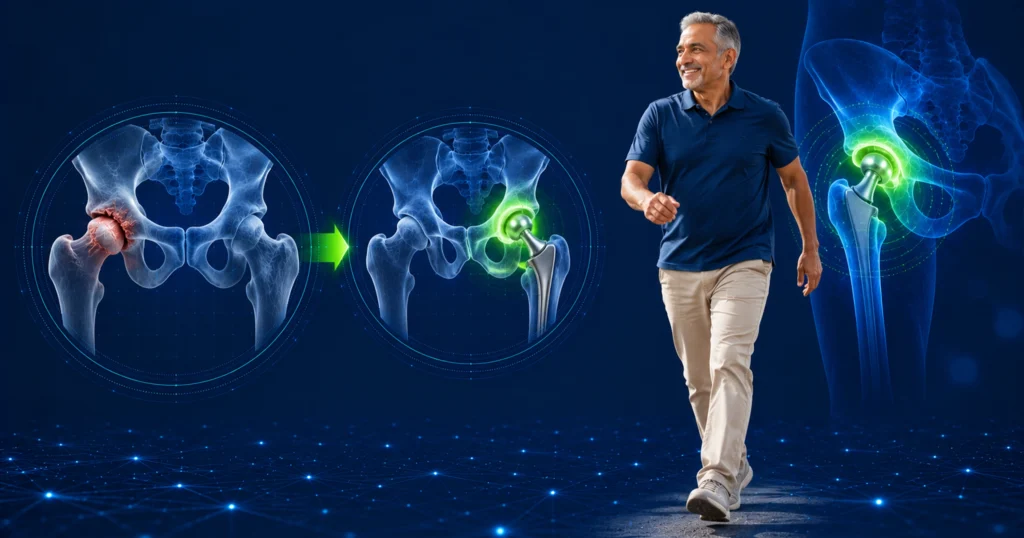
Living with constant hip pain is exhausting. It makes simple tasks like walking or sleeping feel like a battle. When the cartilage wears down, your bones grind together, creating inflammation and sharp, stabbing sensations. If medicine and exercise no longer help, a hip replacement can change your life. By addressing the root cause of the pain, you are not just fixing a joint; you are reclaiming your independence. Modern advancements have made this surgery more predictable and successful than ever before.
What is a Hip Replacement?
Your hip is a "ball-and-socket" joint. A smooth tissue called articular cartilage covers the bones, letting them glide easily during movement. When this cartilage wears away, bone rubs against bone, causing chronic pain, swelling, and a loss of flexibility. During a Hip replacement surgery in India, a surgeon removes the damaged parts and replaces them with a prosthetic implant made of metal, ceramic, or medical-grade plastic. These new parts mimic a healthy joint and restore your range of motion.
Why Do People Need This Surgery?
Osteoarthritis: The most common cause. A degenerative "wear-and-tear" disease from aging that slowly thins the cartilage until the bone is exposed.
Rheumatoid Arthritis: An autoimmune disease that attacks the synovial lining, leading to severe joint erosion and deformity.
Osteonecrosis: When blood does not reach the femoral head, the bone tissue dies and the joint eventually collapses.
Injury: A bad fall or a femoral neck fracture that cannot be fixed with screws can permanently disrupt the joint's alignment.
Your Surgical Options
Every patient is different. Your doctor will choose the best method for your specific anatomy after reviewing your X-rays and bone density.
Total Hip Replacement India
The surgeon replaces both the femoral head and the acetabulum (the socket). Many hospitals in India now use robotic-assisted technology to place the components with sub-millimeter accuracy, helping the implant feel more natural and last much longer.
Minimally Invasive Surgery
Smaller incisions mean less trauma to the surrounding tendons and ligaments, often leading to a faster recovery, less scarring, and less blood loss.
Why Travel to India for Surgery?
India has become a top global destination for orthopedic excellence. The price of the procedure is much lower than in the US or Europe—but "low cost" does not mean low quality. The Low cost hip replacement India offers is due to lower hospital overhead and favorable exchange rates. You receive treatment in five-star facilities that use the exact same FDA-approved implants found in Western countries.
Top Surgeons for International Patients
The Top hip replacement surgeons India for African patients—treating families from Nigeria, Kenya, Ethiopia and beyond—are experts in advanced arthritis and complex cases where the joint is severely damaged.
Personalized International Services
Assistance with medical visa invitations and extensions, airport pickup in specialized medical transport, and language translators to ensure you understand every step of your care.
Cultural Care
Dietary options that cater to your specific cultural or religious needs throughout your stay.
What Happens During Surgery?
The surgery is a well-coordinated process focused on safety and sterile conditions, usually taking about 60 to 120 minutes. You receive anesthesia (general or a spinal block with sedation) so you feel no pain. The surgeon makes a careful incision, gently moves the muscles aside, and removes the worn-out bone. The artificial socket is pressed into the pelvis and a metal stem is placed inside the hollow center of your thigh bone. Finally, the surgeon tests the new joint for stability and leg length before closing the skin with stitches or surgical staples.
Recovery and New Life
The First Few Weeks: You stay in the hospital for about 3 to 5 days. A physical therapist teaches you to sit, stand, and walk safely, starting with a walker for steadiness.
Building Strength: After a few weeks you transition to a cane as your muscles get stronger. Soon, you will be walking on your own without any support.
Long-Term Results: Most modern hip implants last between 15 and 25 years with proper care. You can return to low-impact activities like walking, swimming, and cycling—and enjoy daily life without the constant shadow of pain.
Important Rules for the First 6 Weeks
Do not cross your legs at the knees or ankles. Do not bend your hip past a 90-degree angle. Use a high-seated chair and a raised toilet seat to avoid deep bending. Complete your daily physical therapy exercises to build muscle support.
Frequently Asked Questions
Is the hip replacement surgery safe?
Yes. It is one of the most successful surgeries in modern medicine. Surgeons take great care to prevent infections and ensure the implant is perfectly aligned.
How long does the replacement pain last?
The deep, aching "bone-on-bone" pain is usually gone the moment you wake up. You will have some soreness from the incision, but this is easily managed with modern pain medication.
When can I fly home after surgery?
Most international patients are cleared to fly 2 or 3 weeks after surgery. Your doctor will perform a final check-up to make sure you are healing well before you depart.
One-stop connections run from Lagos, Abuja, Douala and Yaoundé to Delhi via Addis Ababa, Doha, Dubai or Istanbul. We issue the medical visa invitation letter, meet you at the airport and arrange accommodation near the hospital for you and anyone travelling with you.
Costs for this procedure are quoted case by case. Send your reports on WhatsApp and we will return a written estimate within 24 hours, quoted in US dollars with the equivalent in Naira (₦) or CFA francs at that day's rate.